

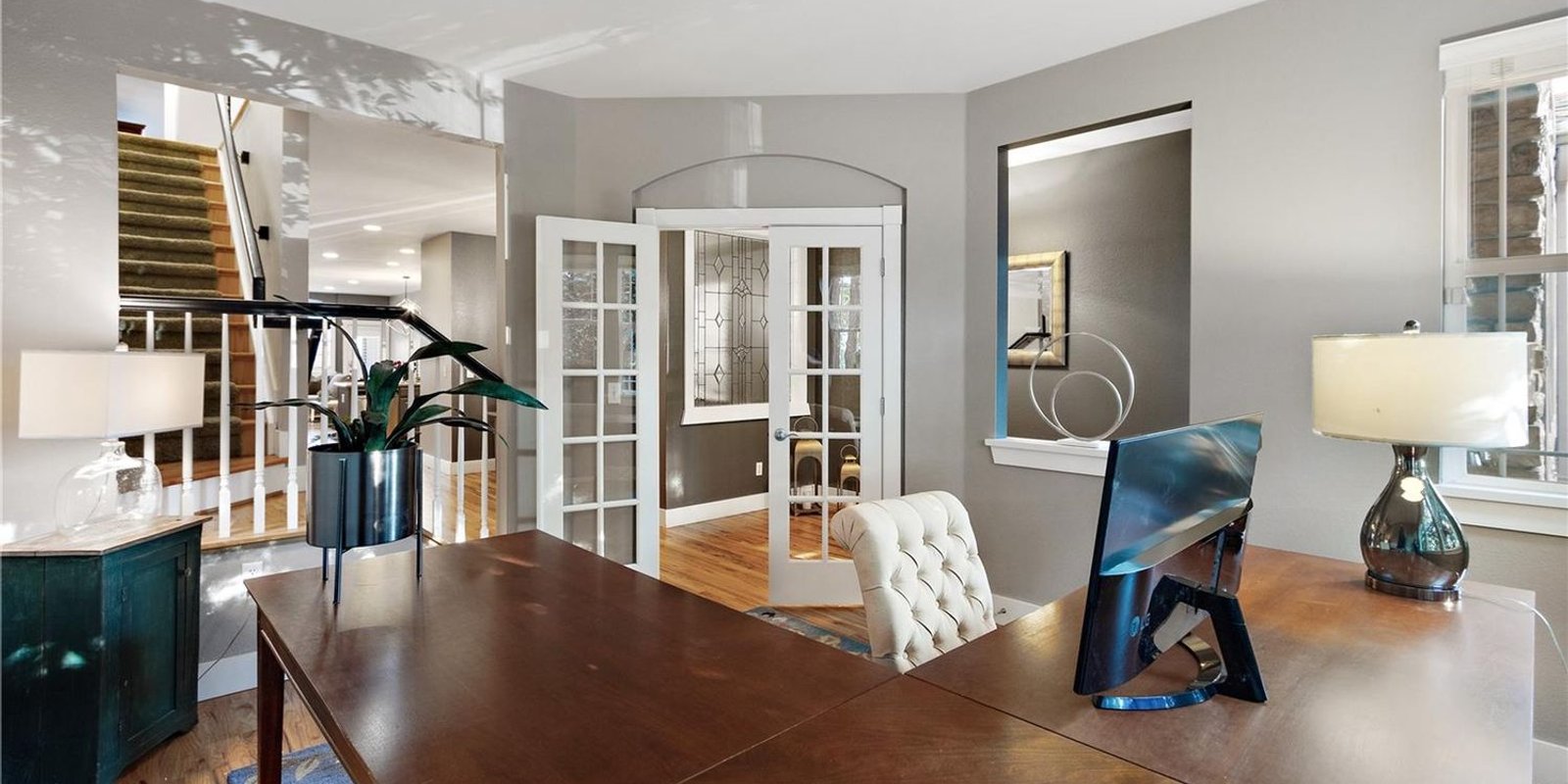

Most sellers I meet have two competing fears when it comes time to list. The first is leaving money on the table. The second is throwing good money after bad on upgrades that will not pay off. Both fears are reasonable. Both have answers.
After 17 years selling luxury homes across the Denver metro, I have watched the same kitchen update return three different multiples depending on the neighborhood, the buyer profile, and the timing. Pre-listing renovation is part art and part math. Here is how I think about it for my sellers, and what I recommend you focus on before you list a $1M+ home in the Denver area.
Start with what buyers see in the first ten seconds
The first impression of your home does not happen at the front door. It happens in the listing photos and the first ten seconds of an in-person showing. Three line items consistently outperform everything else.
Exterior paint and a front-door refresh. A faded entry reads as deferred maintenance whether or not anything else is wrong. A fresh coat of paint on the door and trim, updated hardware, and dusk-rated lighting give buyers the right read before they have touched the handle.
Landscaping that frames the home. This is not about a six-figure overhaul. It is about edged beds, healthy turf, a few well-placed pots, and tree limbs that do not block the architecture. Buyers driving up should see the home, not the maintenance list.
Interior paint in current colors. Neutral and warm has replaced the cool grays of the 2010s. Soft whites, warm beiges, and muted greiges photograph cleanly and let the home feel current without committing to a trend.
These three together typically run between $5,000 and $15,000 depending on home size. In a $2M home, that is well under one percent of the price for the lift you get on offer day.
The kitchen test
The kitchen is the single most expensive room to renovate and the single most scrutinized room in a luxury sale. Buyers in the $1M to $2.5M range expect a kitchen that is move-in ready, not a project they will need to take on.
That does not mean you need to gut yours. Ask three questions before you spend a dollar.
- Is the cabinet footprint right, or is the layout dated?
- Is the cabinet condition repaintable, or are they shot?
- Are the counters dated (busy granite, tile, laminate) or current (soft quartz, honed marble, calacatta)?
If the answer is "layout fine, cabinets paintable, counters dated," you are looking at a $15,000 to $30,000 refresh that will return multiples of that on closing day. If the answer is "layout wrong, cabinets shot, counters dated," you are looking at a full renovation that may or may not pencil out depending on your timeline and market position. I tell my sellers honestly when the math does not work and we list as-is with a credit instead.
Bathrooms: focus on the primary, leave the secondaries alone
The primary bathroom matters far more to a luxury buyer than the secondary baths. If yours has 1990s cultured marble, builder-grade vanities, or a soaking tub no one would actually use, that is where dollars go to work. A primary bath refresh in the $20,000 to $40,000 range can move an offer by significantly more than that.
Secondary bathrooms rarely move the needle. Clean them, replace fixtures and lighting if dated, paint, and move on.
The work that does not show but costs you money when you skip it
Inspectors do not care about your kitchen. They care about the systems. Three things hold up far more luxury deals than buyers want to admit.
HVAC. If your furnace is original to a 25-year-old home, replace it before listing or be prepared to credit. A new high-efficiency system shows up on the inspection report as "new," which is exactly what a buyer wants to see.
Roof. A roof at the end of its life is a deal-killer in Colorado. Hail-rated, recent replacements with transferable warranties calm a buyer down faster than almost anything else.
Sewer scope and radon mitigation. Both are cheap to check and cheap to fix relative to what they will cost you in negotiations after the inspection. Get ahead of them.
You should not be writing checks for any of this
This is where my service is different from most. For my sellers, I coordinate and front the cost of pre-listing renovation, repairs, photography, and staging at zero interest and zero out of pocket. You pay from your proceeds at closing.
That means the math is no longer "should I spend $30,000 on the kitchen when I am not sure I will recover it?" The math becomes "the kitchen renovation will be done by a vetted contractor on a schedule that protects my listing window, and I will pay for it from the higher sale price it produces."
When the upgrade costs you nothing upfront, the only question that matters is "does it move the sale price by more than its cost?" That is a much simpler question to answer.
What I would skip
A few things I tell sellers to leave alone almost every time.
Pools. Adding one before listing rarely pays off. Maintaining the one you have, yes. Building one, no.
Custom built-ins that read as personal taste. A wine wall in your basement is a feature for someone. It is dead weight for everyone else.
High-end appliance packages on a mid-tier kitchen. A $20,000 range will not save a kitchen that needs new cabinets. Address the kitchen as a system, not as a parts swap.
Where to start
If you are thinking about listing in the next six to twelve months, the highest leverage thing you can do this week is get a real opinion on what your home is actually worth today and what specific changes would move the needle in your neighborhood. I do that as a free home valuation, not a Zestimate.